Friday, 20 September 2013

Friday Fun

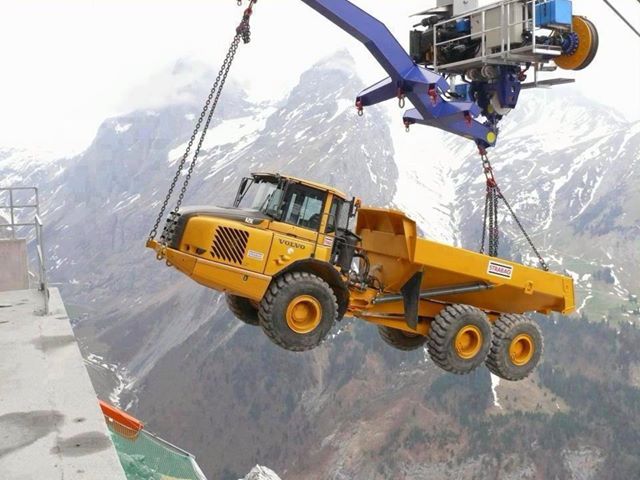
Just to prove we don't have all the fun, this photo recently appeared on Facebook.

Epic!

Wednesday, 18 September 2013

Latest Project - Building in tricky positions

Building a 300 x 300 x 1500 concrete column sounds like a straightforward job for any builder. So why call Up and Under?  

Foundation cast on top of blinding concrete with formwork in place for the column
Well this particular column is in a cave - designed to support the roof - at the bottom of a 20m cliff, in a beauty spot.
The concrete column, injection pointed to the roof
All the materials had to be transported along a narrow track, concrete had to be mixed and lowered down the cliff face before being poured into the formwork.  When the shutters were struck the column was faced with locally sourced stone.
Stone clad, with ground restored
Need a problem solving?  call us 01270 589615.

Monday, 16 September 2013

Assessing Risks - "..they can never be eliminated."

It was refreshing to read Judith Hackitt's (Chair of HSE) Blog ,when talking about the offshore industry's response to the recent helicopter tragedy.  

She commented: "There is a maturity of understanding which is shared by everyone that risks can be managed, but they can never be eliminated."

I would like to believe that there is a similar attitude demonstrated in the best companies in the construction industry.  It is always interesting to note that the more hazardous an activity, the lower the relative number of accidents seems to be.

From my many years of climbing and mountaineering I can easily understand this.  You develop an internal sense that increases your level of attention as the number, and severity, of hazards increase.  What you are doing is assessing risks, constantly then responding.  THe effectiveness of the response is determined by training and experience. Even the best can get it wrong and suffer the consequences.

The formal written risk assessment does many things, a couple of the most useful being to share knowledge and communicate to all members of a team.  Often they are seen as a record for backside covering, but this is looking at the process from the wrong end.

Today I am back in real world after a brief excursion into the mountains, I won't forget that "...hazards never go away" (Judith Hackitt's Blog).

If we can assist you with preparing risk assessment or providing risk assessment training feel free to contact us on 01270 589615

Monday, 9 September 2013

Making Good Decisions

I spent yesterday sea kayaking off the coast of Anglesey.  I was acting as a mock student for a group of aspirant leaders.  As it was a training course there was a detailed, well thought out risk assessment.  We had been well briefed and knew what we had to do.

However it didn't stop there. Throughout the day everyone in the group continued to make decisions based on the changing conditions and unfolding opportunities.  We communicated our varying states of fatigue and desires to try to squeeze through ever narrowing slots in the jagged rocks.

It all worked out well with all of the paddlers going home safely after an exciting day.  so, thank goodness for the risk assessment.  mmmmmmm, it probably goes deeper than that, the whole team had a good appreciation of the risks involved and the skills to deal with the conditions. The risk assessment can only ever provide a framework for a safe day, real safety relies on the right culture,  communication and people making good decisions.

If you want to talk to us about developing an excellent culture of safety call 01270 589617
Friday, 30 August 2013

Friday Fun - Messing with the Boss

Does Andy ever get out on the ropes?  We have heard this question many times and today we present the evidence.  The rare Andius Fewtrellius was spotted recently beneath a bridge on the England/Wales border.  As you can see he still has no fashion sense and was sporting a boiler suit with slightly short legs and lovely red socks.
"So what happens if I undo this?"
 Of course, Simon was doing all the work, taking accurate measurements of deflection in the bridge deck.  Monitoring displacement and movement in structures is a common activity at Up and Under. 
At the business end, taking measurements.

Tuesday, 27 August 2013

Get the Paperwork Right

As it is a holiday week can you forgive me a lighthearted serious post?

We all know that we live in a paperwork mad society, but some of it is worthwhile.  Take risk assessments. Yes of course we all do that in our head, but what if you have lots of experience and make good decisions?  What if these decisions are not shared by your less experience colleagues?  So now can you can see why a formal system of sharing information can make a difference.

The same goes for COSHH assessments, work instructions and specifications.  Specs can run to book lengths, so why imagine you can remember the detail!

And while on the subject of having the correct paperwork how about this man?


If you need assistance with risk assessment preparation or training give us a call 01270 589615

Friday, 23 August 2013

Surviving Bank Holiday Car Journeys

Yipee it's bank holiday!  Ah that means hours sitting in traffic jams.  So here are a few tips to make the journey a little less painful.

  1. Leave later, everyone seems to get a flyer straight from work, you'll be tired, stressed, hungry and thirsty.  Take your time, have tea with the family have a rest then get on the road a little later, the roads will have cleared and it will be cooler.
  2. Prep the car for the journey, yeah the oil and water stuff, but also put some food and drink handy for the driver and the kids.  Pack pillows and blankets for the kids to make them comfortable in the back, books and games too.  Sort the music, stories, etc for the stereo.
  3.  Plan your route, pre-programme your destination into a sat nav, work out stops along the way and take a map in case there is a problem with the sat nav route.  Make sure your camp site, B&B or hotel knows you will be arriving later.  Going further afield? Tickets - Passport - Money!
  4. On long journeys take regular breaks, every 60 miles or 1 hour, do a quick driver change.  Swap over before you feel tired, that way you stay fresh - and safe - for longer.  If you are doing a long drive and feel sleepy open windows and loud radios don't always work, more effective is a short nap, better to arrive alive.
  5. Have a day at home and a two day break, that way you only have to fight the traffic once.

And one final thought, stay at home and visit all the local attractions you have been meaning to visit for years.

Have a good Bank Holiday weekend from all at Up and Under